Apply for Germany Skilled Worker Visa Jobs Paying €45,000–€70,000 (No EU Experience Required)
Apply for Germany Skilled Worker Visa Jobs Paying €45,000–€70,000 (No EU Experience Required)
Germany stands as one of the strongest employment markets in the world. The country combines economic stability, high wages, strong worker protections, and a constant demand for international talent. Skilled professionals from outside Europe now play a critical role in filling labor shortages across multiple industries.
Many international job seekers assume they need European work experience to qualify for German jobs. That assumption creates hesitation, delays, and missed opportunities. In reality, thousands of employers in Germany actively recruit foreign professionals without EU experience. Companies focus on skills, qualifications, and practical expertise.
This guide explains why Germany offers exceptional opportunities, which industries pay competitive salaries, how to qualify for the Skilled Worker Visa, and how to position yourself for success.
Why Germany Needs Skilled Foreign Workers
Germany faces structural labor shortages. Demographic shifts, an aging workforce, and industrial growth continue to widen the gap between job openings and available local talent. Employers now search globally to meet hiring needs.
Several factors drive this demand:
• Retiring professionals reduce workforce capacity
• Rapid technological growth increases skill requirements
• Industrial expansion creates new roles
• Healthcare demands continue to rise
• Engineering and manufacturing sectors scale operations
Germany’s immigration framework supports this need by simplifying pathways for skilled foreign professionals.
Understanding the Germany Skilled Worker Visa
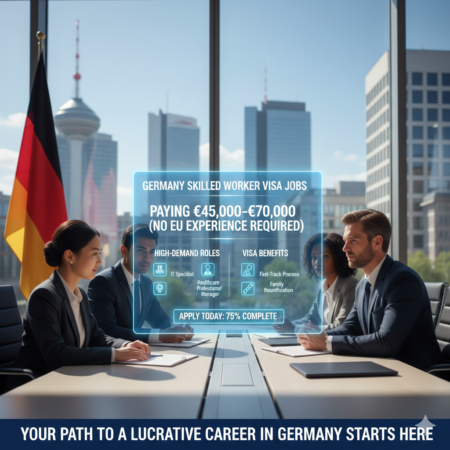
The Germany Skilled Worker Visa allows qualified non-EU professionals to live and work legally in the country. The visa targets individuals with recognized qualifications, technical expertise, or specialized training.
Unlike many immigration programs, Germany does not require prior EU work experience.
Key principles include:
✔ Skills matter more than location of experience
✔ Recognized qualifications drive eligibility
✔ Employer sponsorship simplifies approval
✔ Salary thresholds reflect professional roles
This visa creates one of the most accessible employment pathways for international workers.
Salary Expectations: €45,000 – €70,000 Range
Germany offers strong earning potential across multiple sectors. Salaries depend on experience, specialization, location, and industry demand.
The €45,000 – €70,000 salary range typically applies to:
• Mid level professionals
• Technical specialists
• Skilled trades experts
• Engineers
• IT professionals
• Healthcare practitioners
• Logistics and operations managers
Higher salaries often appear in technology, engineering, finance, and specialized medical roles.
High-Demand Industries Hiring Foreign Workers
Germany’s labor shortages extend beyond tech roles. Several industries consistently hire international professionals.
Information Technology (IT)
Germany’s digital transformation continues to accelerate. Companies seek developers, analysts, cybersecurity specialists, and cloud engineers.
Common roles:
• Software Developer
• Data Analyst
• IT Consultant
• DevOps Engineer
• Cybersecurity Specialist
Why employers hire internationally:
✔ Skill shortages exceed domestic supply
✔ Global expertise improves innovation
✔ Experience outside Europe still counts
Salary Range: €50,000 – €75,000+
Engineering
Germany’s industrial backbone depends on engineering excellence. Mechanical, electrical, civil, and automotive engineers remain in constant demand.
Common roles:
• Mechanical Engineer
• Electrical Engineer
• Industrial Engineer
• Automation Specialist
• Civil Engineer
Salary Range: €48,000–€72,000+
Healthcare
Germany’s healthcare system continuously recruits foreign professionals. Doctors, nurses, therapists, and medical technicians secure strong opportunities.
Common roles:
• Registered Nurse
• Medical Doctor
• Physiotherapist
• Radiology Technician
• Care Specialist
Salary Range: €45,000 – €70,000+
Skilled Trades
Many job seekers overlook skilled trades. Germany values certified technicians, electricians, welders, and mechanics.
Common roles:
• Electrician
• Industrial Mechanic
• CNC Operator
• Welder
• HVAC Technician
Salary Range: €45,000 – €65,000+
Logistics & Supply Chain
Germany’s position as Europe’s logistics hub creates steady demand for operations professionals.
Common roles:
• Supply Chain Coordinator
• Logistics Manager
• Warehouse Operations Specialist
• Procurement Officer
Salary Range: €45,000 – €68,000+
Do You Really Need EU Experience?
No.
German employers prioritize competence over geography. Experience gained in Asia, Africa, the Middle East, or the Americas still holds value when it aligns with job requirements.
Employers care about:
✔ Technical skills
✔ Certifications
✔ Problem-solving ability
✔ Industry knowledge
✔ Communication competence
EU experience may help, but it never acts as a universal requirement.
Basic Eligibility Requirements
Germany maintains clear qualification standards.
You typically need:
✔ Recognized educational qualification
✔ Relevant professional experience
✔ Job offer from German employer
✔ Proof of financial stability (in some cases)
✔ Language proficiency (role dependent)
Highly technical roles often require English rather than German.
Qualification Recognition Matters
Germany evaluates foreign qualifications through official recognition procedures. This step determines visa eligibility and employer acceptance.
Recognition ensures:
✔ Your credentials meet German standards
✔ Employers trust your expertise
✔ Visa approval proceeds smoothly
Professionals can check recognition databases and submit documents for evaluation.
ALSO READ:
Top 10 In Demand Jobs in Germany for Foreigners With Visa Sponsorship in 2026/2027
Apply for USA $80,500+ Construction Jobs With Visa Travel Sponsorship in the United States
Hospital Jobs and Hotel Jobs With Work Visa in the USA
How to Find Skilled Worker Visa Jobs
Strategic job searching increases success rates dramatically.
Target the Right Job Platforms
Focus on international-friendly recruitment channels:
• LinkedIn
• Indeed Germany
• StepStone
• Make-it-in-Germany portals
• Company career pages
Search Using Smart Keywords
Use phrases like:
• “Visa Sponsorship Germany”
• “International Applicants Welcome”
• “English Speaking Jobs Germany”
• “Relocation Support Germany”
Focus on Skill-Shortage Roles
Positions experiencing shortages attract more foreign candidates.
Examples:
✔ Engineering
✔ IT & software
✔ Healthcare
✔ Skilled trades
✔ Technical operations
Crafting a Strong Application
Germany values clarity, structure, and professionalism.
German-Style CV Strategy
A competitive CV should include:
✔ Clean formatting
✔ Chronological structure
✔ Clear skills summary
✔ Quantifiable achievements
✔ Certifications & tools
Avoid unnecessary design complexity.
Write a Focused Cover Letter
Employers expect precision.
Explain:
✔ Why you fit the role
✔ How your skills solve problems
✔ Your motivation to work in Germany
How to Apply for Germany Skilled Worker Visa Jobs
Let’s break this into practical steps.
Step 1: Secure a Job Offer
Everything starts here.
Apply strategically:
✔ Tailor each CV
✔ Personalize cover letters
✔ Highlight relevant skills
✔ Demonstrate measurable impact
Step 2: Confirm Qualification Recognition
Once you receive an offer:
✔ Submit credentials for evaluation
✔ Provide academic records
✔ Include professional certifications
Step 3: Gather Required Documents
Prepare:
✔ Passport
✔ Employment contract
✔ Recognized qualification proof
✔ Financial documentation (if required)
✔ Health insurance coverage
Step 4: Submit Visa Application
Apply through:
German embassy or consulate in your country.
Step 5: Attend Visa Interview
Present:
✔ Clear career intent
✔ Employment details
✔ Qualification evidence
Step 6: Relocate and Begin Employment
After approval:
✔ Arrange accommodation
✔ Register residence
✔ Open bank account
✔ Start work
Common Mistakes That Delay Success
Many applicants sabotage progress unintentionally.
Mistake 1: Waiting for Perfect Conditions
Job seekers delay applications while chasing EU experience or additional credentials.
Action beats hesitation.
Mistake 2: Weak CV Localization
Generic CVs reduce interview chances.
Tailor for German standards.
Mistake 3: Applying Randomly
Volume without strategy wastes effort.
Target shortage-driven roles.
Mistake 4: Ignoring Skilled Trades
Trade careers often offer faster entry and strong salaries.
Why Germany Attracts International Professionals
Germany delivers advantages beyond salary.
✔ Strong labor protections
✔ High quality of life
✔ Reliable healthcare
✔ Career stability
✔ Clear immigration pathways
✔ Long-term residency options
Long-Term Career Growth Potential
Germany supports upward mobility.
Professionals often experience:
✔ Salary progression
✔ Leadership opportunities
✔ Skill specialization
✔ International career recognition
Final Thoughts
Germany’s Skilled Worker Visa opens doors that many international professionals underestimate. Employers actively recruit foreign talent across multiple industries. EU experience rarely acts as a barrier when candidates demonstrate strong skills and recognized qualifications.
The €45,000–€70,000 salary range reflects real, accessible opportunities. Success depends less on geography and more on preparation, positioning, and strategic job searching.
Skilled professionals who take action, refine applications, and target high-demand roles dramatically increase their chances of securing German employment.
Germany rewards expertise. The opportunity exists. The decision to pursue it remains yours.