Jobs in Germany That Offer Fast-Track Residence Pathways
Jobs in Germany That Offer Fast-Track Residence Pathways
Germany has become a top destination for skilled international professionals seeking stable careers, competitive salaries, and long-term residency opportunities. Beyond employment, the country provides pathways for highly qualified workers to obtain permanent residence more quickly than standard visa processes. Certain high-demand jobs not only pay well but also make it easier for foreign workers to secure long-term residency.
This guide explores which jobs and sectors offer accelerated residency pathways, the salary expectations, eligibility requirements, and practical strategies for foreign professionals aiming to build a career and future in Germany.
Understanding Fast-Track Residence Pathways in Germany
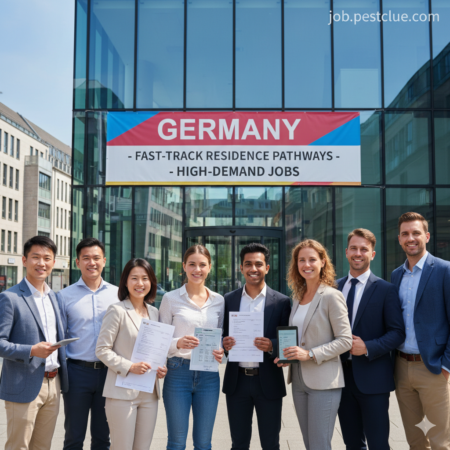
Germany provides specific immigration options to retain skilled international workers who contribute to its economy. Fast-track residence pathways allow foreign professionals to apply for permanent residency sooner than normal.
Key programs include:
EU Blue Card
The EU Blue Card is a residence and work permit for highly qualified professionals. Holders can apply for permanent residency after 33 months. If they demonstrate German language proficiency at B1 level, this period reduces to 21 months.
Skilled Worker Visa
This visa targets professions that face labor shortages in Germany. Professionals with recognized qualifications can secure a work visa that transitions into permanent residency after a few years of employment.
Special Fast-Track Programs
Certain sectors, including engineering, healthcare, IT, and research, have programs that allow accelerated permanent residency due to high demand for their expertise.
These pathways help Germany attract and retain talent while giving foreign professionals faster access to long-term security and family benefits.
Why Certain Jobs Offer Accelerated Residency
Germany prioritizes professionals who fill labor shortages. Jobs in high-demand sectors often qualify for fast-track residency because:
- Employers can fill critical positions quickly
- The government reduces visa processing times
- Candidates gain permanent residency sooner
- Family members can join the applicant more easily
Professionals in shortage occupations gain a competitive advantage because Germany actively encourages employers to hire them.
High-Demand Sectors With Fast-Track Opportunities
Germany emphasizes several sectors for accelerated residency pathways. These include technology, engineering, healthcare, skilled trades, and research.
Technology and IT Careers
Germany’s digital economy continues to grow rapidly. Professionals with IT skills are highly sought after.
Common fast-track roles include:
- Software Developer
- Cloud Engineer
- Data Scientist
- Cybersecurity Specialist
- DevOps Engineer
- AI and Machine Learning Specialist
- Systems Architect
Salaries typically range from €50,000 to €90,000. Candidates with certifications and experience in emerging technologies often receive the highest offers.
Engineering Professions
Germany’s industrial strength relies on engineers. Professionals in mechanical, electrical, civil, automotive, and mechatronics engineering are critical to manufacturing, energy, and construction industries.
High-demand positions include:
- Mechanical Engineer
- Electrical Engineer
- Civil Engineer
- Automotive Engineer
- Mechatronics Engineer
- Industrial Automation Engineer
- Renewable Energy Engineer
Salaries range from €45,000 to €80,000 depending on specialization, experience, and industry sector. Engineers with niche skills in automation, robotics, or renewable energy are highly valued.
Healthcare and Medical Roles
Germany faces increasing demand in healthcare due to its aging population. Professionals in medicine, nursing, and technical medical roles can qualify for fast-track residency.
Roles include:
- Medical Doctor
- Specialist Physician
- Registered Nurse or Specialist Nurse
- Pharmacist
- Medical Laboratory Scientist
- Medical Technologist
Salaries vary depending on specialization. Physicians can earn €60,000 to €100,000, while nurses and technical staff earn €40,000 to €60,000. Residency pathways are clear for professionals in these sectors.
Skilled Trades and Technical Occupations
Skilled trades are essential to Germany’s industrial and infrastructure sectors. Many trades offer accelerated permanent residency because they fill labor shortages.
High-demand trades include:
- Industrial Electrician
- CNC Machinist
- Automation Technician
- HVAC Technician
- Precision Mechanic
- Industrial Maintenance Specialist
Salaries range from €40,000 to €55,000. Tradespeople with recognized qualifications and experience are prioritized for fast-track visas.
Research and Academic Careers
Germany invests heavily in research, particularly in science, technology, engineering, and mathematics. Researchers and academics can often benefit from accelerated permanent residency.
Roles include:
- Research Scientist
- Biotechnologist
- Physicist
- Chemist
- AI Research Specialist
- University Faculty
Salaries vary by seniority and funding, but residency benefits are strong for professionals in strategic research areas.
Salary Expectations
Salary requirements play an important role in visa eligibility and accelerated residency. Germany sets minimum thresholds for highly skilled professionals.
Factors affecting salaries include:
- Level of experience and seniority
- Job location
- Industry demand
- Specialization or niche expertise
- Company size
IT professionals often earn €50,000 to €90,000, engineers €45,000 to €80,000, healthcare professionals €40,000 to €100,000, and skilled tradespeople €40,000 to €55,000. Competitive compensation supports both visa approval and career growth.
CHECK: Best Way To Clean Dog Vomit From Wool Carpet (Without Ruining It)
How to Identify Jobs With Fast-Track Residency
Foreign workers should focus on roles that meet these criteria:
Shortage Occupations
Germany publishes lists of occupations in high demand. Jobs on these lists often qualify for fast-track residency.
Salary Thresholds
Check that job offers meet or exceed Germany’s minimum salary requirements for residency eligibility.
Qualification Recognition
Verify that foreign degrees and certifications are recognized in Germany. Engineers, healthcare workers, and technical professionals may require official validation.
Employer Sponsorship
Many fast-track programs require employer sponsorship for the work visa and residency process.
How to Apply for Jobs Offering Fast-Track Residency
Foreign professionals can follow a clear application process:
1. Prepare Documentation
Include a valid passport, degree certificates, proof of professional experience, language proficiency certificates, and a confirmed job offer from a recognized employer.
2. Target High-Demand Sectors
Focus on jobs in IT, engineering, healthcare, trades, or research. Prioritize companies known for hiring international talent.
3. Use Multiple Job Platforms
Search professional networks, recruitment agencies, company career portals, and the Federal Employment Agency (Bundesagentur für Arbeit) portal.
4. Customize Your Application
Tailor your resume and cover letter to highlight technical skills, measurable achievements, and relevance to German labor needs.
5. Prepare for Interviews
Demonstrate technical skills, problem-solving abilities, and cultural fit during interviews. Research the company and industry context beforehand.
6. Submit the Visa Application
Apply at the German embassy or consulate with all required documentation. Fast-track jobs may receive priority processing.
Maximizing Career Growth and Residency Benefits
Foreign professionals can enhance long-term outcomes by:
- Developing specialized skills in shortage occupations
- Improving German language proficiency
- Networking within professional communities
- Researching salary standards for effective negotiation
- Obtaining recognized certifications
These strategies improve earning potential, career stability, and eligibility for accelerated residency.
Common Mistakes to Avoid
- Applying without focusing on shortage occupations
- Accepting job offers that do not meet salary thresholds
- Failing to validate qualifications in Germany
- Ignoring language and cultural integration
- Overlooking professional networking opportunities
Avoiding these mistakes increases the chances of securing high-paying jobs with fast-track residency.
Additional Opportunities
Fast-track residency jobs often come with additional benefits:
- Professional development programs
- Participation in research and innovation projects
- Opportunities to transition to the EU Blue Card or permanent residency
- Family reunification options
Candidates should consider these benefits when evaluating job offers.
Where to Find Fast-Track Residency Jobs
Reliable sources include:
- Federal Employment Agency (Bundesagentur für Arbeit) portal
- Industry-specific websites and professional associations
- Recruitment agencies specializing in international placements
- LinkedIn and other professional networking platforms
- Company career pages in industrial, healthcare, and technology sectors
Using multiple sources increases visibility and access to suitable positions.
Final Thoughts
Germany offers excellent opportunities for international professionals seeking long-term careers and residency. Jobs in technology, engineering, healthcare, skilled trades, and research provide competitive salaries and fast-track permanent residency.
Success depends on preparation, targeting shortage occupations, and investing in skills, language, and cultural integration. Professionals who follow these strategies can secure high-paying positions and long-term security in one of Europe’s strongest economies.
For international workers, fast-track residency jobs in Germany offer a clear path to career growth, stability, and permanent settlement.